


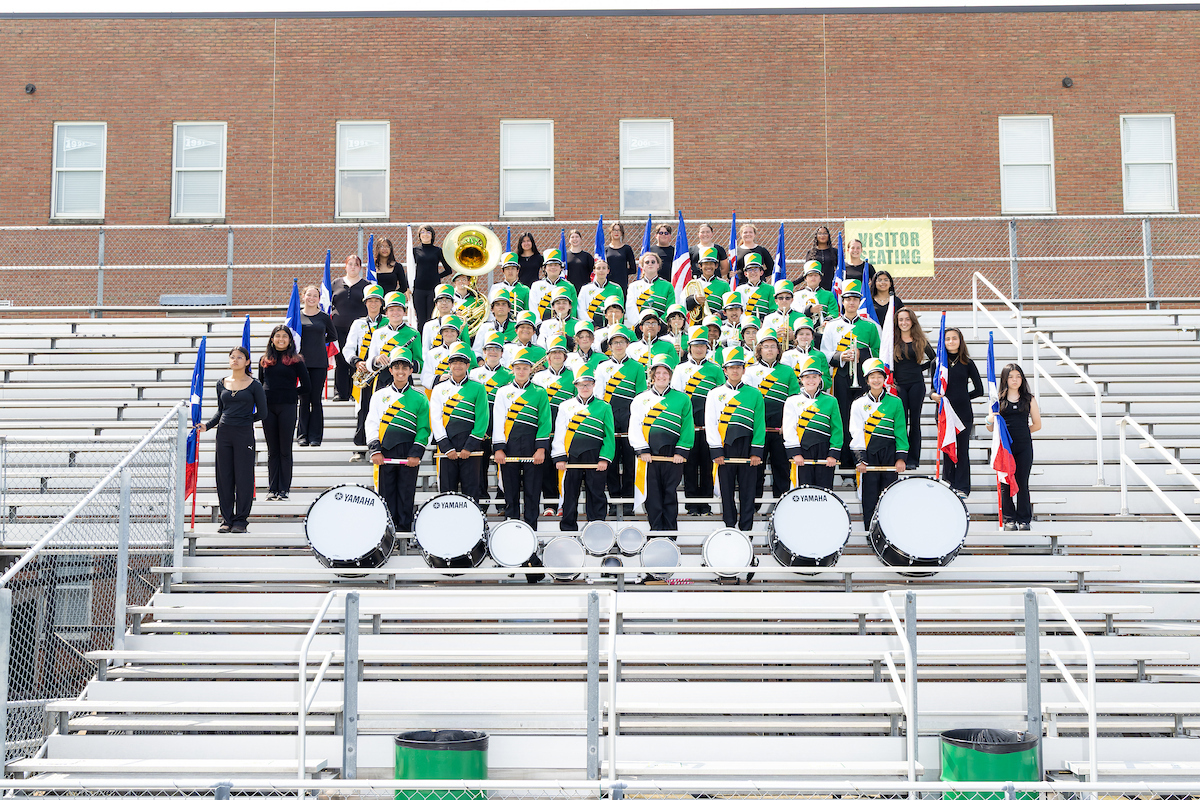



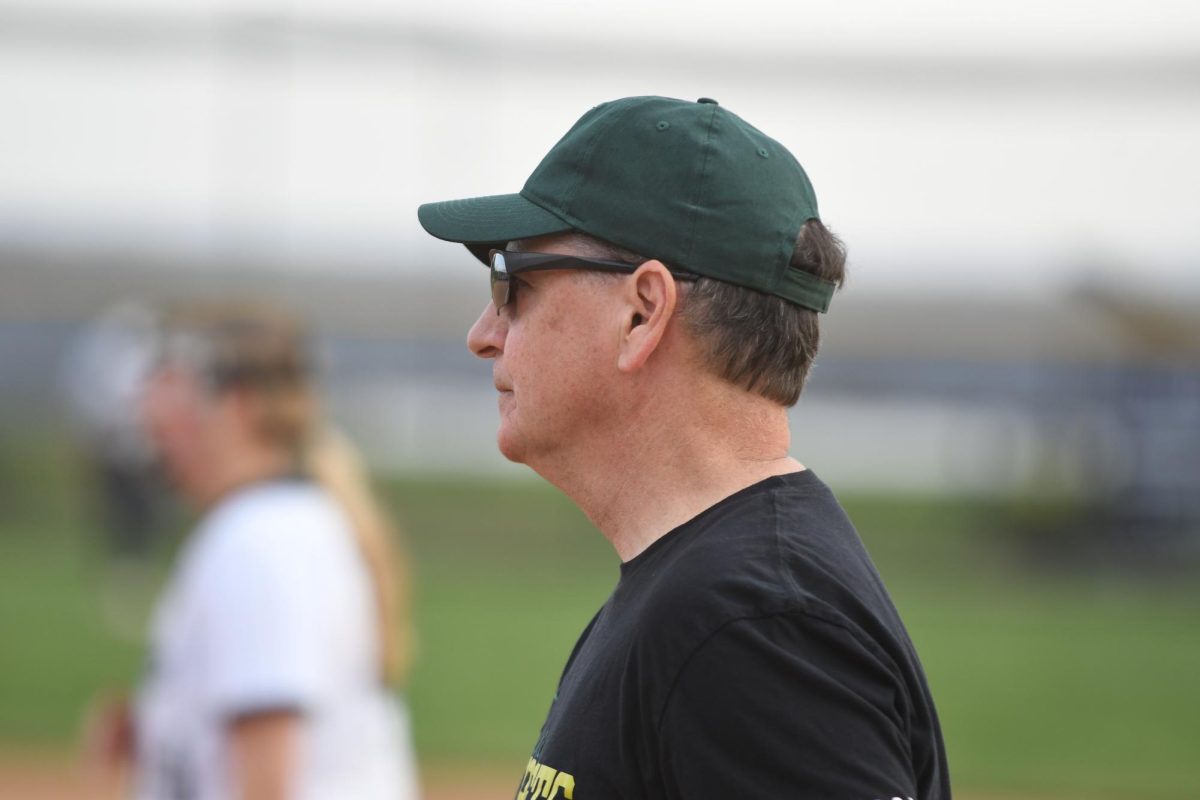





Dr. Doherty is the very model of a modern public educator. He’s young but has experience, he’s relaxed but gets things done, and he’s a teacher that students like to hang around at lunch every day. Prior to this school year, Dr. Doherty was the director of all of Damascus’ instrumental music programs, the bands, orchestras, the pit for drama club, and the marching band. Dr. Doherty still directs the pit, the symphony orchestra, and the advanced band; however, this year has brought about new responsibilities as he takes on the role of a resource teacher. Essentially, Dr. Doherty is the person who teachers in his department look to for advice and is responsible for leading his entire department. This leadership and the workload that comes with it is no small feat to take on on a day-to-day basis, but he has taken it and flourished since the beginning of the school year.
This kind of leadership isn’t just entrusted to anyone, and Dr. Doherty has worked extremely hard to get to the position he is in. He graduated with a degree in music education from Duquesne University, a school with a very expansive music program. He started teaching part-time in 2005 while he was in grad school at Dusquesne, where he taught music at the Pittsburgh Catholic Diocese. He said that initially, he “didn’t want to leave Pittsburgh” but applied to Damascus because his father was an MCPS teacher and encouraged him to take the position, and he got it and started teaching here in 2006. Up until this year, he was the director of all instrumental music ensembles at Damascus, as well as occasionally teaching the guitar class. He said that one of his biggest challenges starting out was that due to starting out so young, he “was so close in age to the seniors he was teaching.” However, one could say that this isn’t necessarily a bad thing, as now he has a lot of experience under his belt despite still being pretty young.
Of course, with Dr. Doherty’s new position comes new responsibilities. Dr. Doherty said that as a resource teacher, he is now responsible for “ordering materials, setting the schedule for the next school year, and supervising and delivering professional development” for the music, visual arts, and physical education departments. This takes up his entire afternoon schedule as a teacher, so he now only teaches the three advanced ensembles; the Jazz Band, Symphony Band, and Symphony Orchestra. His afternoon classes have been handed off to Damascus’ newest music educator, Mrs. Lisa Ehrenspeck. Mrs. Ehrenspeck has also developed new responsibilities, as she also works at Baker for their music program and has to go between schools on a daily basis. Because of this, she has found Dr. Doherty to be of great assistance to her assimilation to Damascus, and despite having a slew of things he has to do every day, he still “keeps [her] up to speed and values [her] suggestions.” Dr. Doherty said that while all of these changes “can be difficult,” he believes that the department has “navigated everything really well this year as a team.”
Managing these responsibilities is not the only thing that makes Dr. Doherty as valuable to Damascus as he is. Dr. Doherty is held in high regard by both his colleagues as well as the student body. Dr. Doherty said he believes this is so because the students “know that I care about them and want them to be the best version of themselves that they can be.” To connect with everyone, Dr. Doherty says he tries to “listen to students and teachers and come up with the best solution to a problem or the best way to a goal.”
When asked about what makes Dr. Doherty’s teaching style appealing, senior April Lopez, who has participated in at least two of his ensembles every year, said that she found him “very friendly and open” and felt he “has a particular way of making everyone feel included.” Lopez said that while Dr. Doherty is “a friendly face,” he also “has the knowledge to back up his music program.” Lopez was the drum major for the marching band this school year, and said that Dr. Doherty is “a great person to be under” when working as a student leader, even saying “if [Doherty] chooses you to be his leader, I trust you.” Lopez says the way Dr. Doherty connected with her personally was helping her discover that music was what she wanted to do with her life in her sophomore year during jazz band, and because of this she will be attending prestigious music school Berklee in California. She said that what she likes about Dr. Doherty compared to other teachers in this school is that “he treats you like a normal person” and values what each student brings to the table in terms of personality and knowledge.
This school year, Dr. Doherty was nominated for music teacher of the year by the Maryland Music Educators Association (MMEA). He said that to him, this was “a really nice surprise” because even after twenty years of teaching, he says “in a lot of ways [he] still [feels] like a new teacher.” That is exactly why Dr. Doherty is such a great teacher, because just as the students learn from him, he learns from other teachers as well as the students. If more teachers could be like Dr. Doherty; personable, flexible, respectful, and knowledgeable, then public education would be better off as a whole. In a world of stubborn older teachers that don’t see eye-to-eye with the student body, look at Dr. Doherty as a shining example of what every public educator should be.